SN
By Shivek Narang · Founder, Empower Through Recovery · TBI Researcher, University of Pennsylvania
If Dr. David Fischer's RECOVER Program is focused on the science of predicting who will regain consciousness, then Dr. Matthew Jaffa is focused on what happens to those patients after that prediction has been made and they have left the building. The two problems are inseparable, and the conversation I had with Dr. Jaffa made that clearer than anything I had read.
Dr. Jaffa is a neurointensivist at Hartford Hospital, where he works in the neurocritical care unit and runs what he calls a neurorecovery clinic: a monthly outpatient clinic that follows up with patients weeks or months after their ICU stay, not to manage their acute illness, but to figure out what they actually need now that no one is watching. He trained at the University of Maryland, completed his neurocritical care fellowship there, and has spent the years since trying to answer a question he first asked himself during training: who is checking in on these patients at six months and a year? The answer, he found, was essentially no one.
How He Got Here
Dr. Jaffa's path into this work started in the ICU at Maryland's shock trauma center. As a neurology trainee consulting on patients with acute brain injuries, he kept being asked to help families make decisions about whether to continue restorative care for patients who hadn't woken up. He would tell them: if the prognosis is uncertain and it matters to your loved one to be given time, we can move forward with a tracheostomy, a feeding tube, transfer to a skilled nursing facility. Come back in six months and see where things stand.
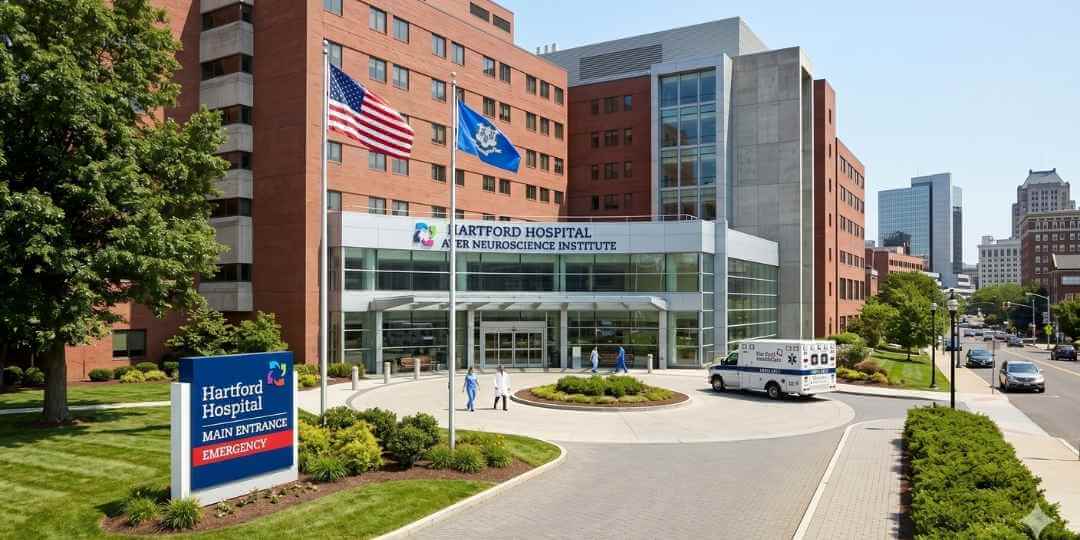
Dr. Matthew Jaffa runs one of the only dedicated neurorecovery clinics in the country at Hartford Hospital's Ayer Neuroscience Institute.
Image: Hartford Hospital / Ayer Neuroscience Institute. Used with permission.
"I started asking myself and others, who was checking in on these patients at six months and a year. And it turns out, no one was really following up on them."
— Dr. Matthew Jaffa
That question led him to his mentor, Dr. Melissa Motta, who was already thinking about building a neurorecovery clinic at Maryland. He grabbed onto her coattails, he said, and learned everything he could. What emerged became the foundation for the clinic he runs today, which is specifically focused on patients who faced what he calls a time-limited trial of restorative care: the families who stood at the most uncertain crossroads and chose to keep going.
The State of the Field: Why These Clinics Barely Exist
Before we got into what his clinic does, I wanted to understand why more of them don't exist. The numbers Dr. Jaffa shared from his own research are striking. When he and his collaborator, Dr. Julia Carlson from UNC, first tried to count neurorecovery clinics nationally, they found roughly seven. A survey they later published in Critical Care Explorations found that post-neuroICU clinics were operational at only 32% of responding institutions, and even that figure overstates the reality, because the survey reached clinicians already likely to be engaged with this type of care. When they counted from scratch, the total was closer to ten to eleven clinics across a country with thousands of hospitals that have neurology departments.
Three barriers Dr. Jaffa identified
Geographic: Most major neurotrauma centers are in large cities. Patients are often transferred back toward home communities — an hour's flight from the nearest center. Telemedicine helped during COVID, but those provisions have been steadily rolled back.
Timing: Knowing when to ask a patient to return is harder than it sounds. Ask too early and they are still in acute rehab. Ask too late and they have already been readmitted, or died. The field does not yet have good answers for when the right follow-up window is.
Structural: Neurointensivists are ICU doctors. Their day job is in the unit. Running an outpatient clinic is, for most of them, a voluntary undertaking done alongside research obligations and exorbitant hours.
"Most of the people who go into neurocritical care did not go into it because they wanted to see patients in the outpatient world," he said. "That limits the pool."
What Actually Happens in the Clinic
In clinic, visits begin not with a chief complaint and targeted examination, but with a conversation about what happened — filling in the fragmented memories of a traumatic hospitalization.
Image: Unsplash (free to use).
When patients do make it into Dr. Jaffa's clinic at Hartford, the visit looks nothing like a standard neurology follow-up. It does not begin with a chief complaint and a targeted examination. It begins with a conversation about what happened. Many patients who survive severe neurological injury emerge from it with fragmented or absent memories of their hospitalization. What they know about their own ICU stay, they have been told by family members who were themselves traumatized, sleep-deprived, and processing an overwhelming amount of information in real time. Dr. Jaffa spends a substantial portion of each visit simply filling in what happened, clarifying what was done and why, and making space for questions the family never got to ask.
After that comes a structured assessment of what the patient needs right now. Has their insurance cut off physical therapy? Are they still on anti-seizure medications but haven't seen a neurologist since discharge? Is there a driving restriction no one has formally reviewed? These are the places, Dr. Jaffa said, where patients who don't have a clear medical home fall through.
"I never thought I would be having marriage counseling sessions and talking about sexual dysfunction in a neurology clinic. But it's something that is really important to patients."
— Dr. Matthew Jaffa
He asks every patient to rate their degree of recovery on a scale of zero to ten. Then he asks how satisfied they are with it. Then he asks every family member in the room the same questions individually. The gap between those numbers, between perceived recovery and experienced satisfaction, is one of the most important things his clinic tracks.
The Feedback Loop That Doesn't Exist
One of the most important threads running through our conversation was the same one I heard from Dr. Fischer: the prognostic feedback problem. ICU clinicians make predictions about who will recover, and then they never find out whether those predictions were right. Without that information, the field cannot calibrate.
Dr. Jaffa described data that offers at least a partial window into this. The Track TBI study, a large longitudinal dataset on severe traumatic brain injury, shows that only around 12% of patients have what researchers would classify as a good recovery at two weeks post-injury. By three months, that number rises to 45%. By a year, it is over 54%.
TRACK TBI STUDY — GOOD RECOVERY RATES AFTER SEVERE TBI 2
"We have some sense of after severe traumatic brain injury, what your potential for recovery is, and at what time."
— DR. MATTHEW JAFFA
What that data cannot do, he was careful to note, is tell you what any individual patient will look like. The personalization of prognostication remains one of the hardest problems in the field.
Advocacy and the Resistance He Has Met
I asked Dr. Jaffa directly about resistance to this model. On the institutional side, he presented to department chairs and hospital leadership to make the case for why this clinical model had value even without a clear revenue line attached to it. He is currently working on a paper examining the finances of neurorecovery clinics, because that question—whether these clinics can sustain themselves economically—is one of the central barriers to their spread.
What struck me in his framing of all this is that he doesn't describe advocacy as something separate from clinical work. It is part of the same job. Getting the clinic approved, getting colleagues to refer into it, getting the data that makes the case for replication elsewhere: all of it is advocacy.
What Survivors Actually Need
"Don't think about these survivors as necessarily patients, but rather as humans. That perspective really changes how we focus on what their needs are and takes it away from purely medical, physiologic, or pharmacologic and puts the person in the center of the room."
— Dr. Matthew Jaffa
He went further. Survival after severe brain injury is exceedingly heterogeneous, he said. What it looks like for one person bears no necessary resemblance to what it looks like for another. What he has found, across the patients he has followed in his clinic, is something simpler and harder to quantify: the most important marker for the patients doing well is the ability to give and receive love. Patients who can do that, even when they are functioning very differently than they did before their injury, often carry genuine sparks of happiness.
Closing Reflection
Dr. Fischer helped map the science of consciousness and recovery prediction at the level of brain networks. Candace Gantt brought me into the lived reality of survival. Dr. Jaffa occupies the space between them: the months after discharge, where prediction has already been made, but recovery is still unfolding in ways the system rarely tracks.
What I keep coming back to is how much of this space still feels structurally unowned. Not fully clinical, not fully social, and not yet designed as a system that learns from itself over time. I am continuing this series because those gaps feel connected, even if I cannot yet fully describe how.
Discussion question
Dr. Jaffa says the most important thing he has found across the patients he follows in his clinic is their ability to give and receive love, even when everything else about their functioning has changed. Does that match what recovery has looked like for you or someone you love?
Share your thoughts →
References & Further Reading
- Jaffa MN, Carlson JN, et al. NeuroRecovery clinics: a survey to understand the current landscape. Critical Care Explorations. 2025. PMC free full text ↗
- Maas AIR, Menon DK, Adelson PD, et al. Traumatic brain injury: integrated approaches to improve prevention, clinical care, and research. Lancet Neurol. 2017;16(12):987–1048. doi:10.1016/S1474-4422(17)30371-X ↗
- Corrigan JD, Hammond FM. Traumatic brain injury as a chronic health condition. Arch Phys Med Rehabil. 2013;94(6):1199–1201. PubMed: 23402722 ↗
- Herridge MS, Azoulay É. Outcomes after critical illness. N Engl J Med. 2023;388(10):913–924. doi ↗ — Comprehensive review of multidimensional post-ICU sequelae and the case for a continuum of care beyond hospital discharge.
- Carlson JM, Gheihman G, Emerson K, et al. Novel post-neurointensive care recovery clinic: design, utilization, and clinician perspectives. Neurol Clin Pract. 2025;15(1):e200364. doi ↗ — Single-institution description of the MGH NeuroRecovery Clinic across its first two years; documents feasibility, referral patterns, and clinician satisfaction.
- Salasky V, Jaffa MN, Motta M, Parikh GY. Neurocritical care recovery clinics: an idea whose time has come. Curr Neurol Neurosci Rep. 2023;23(4):159–166. doi ↗ — Conceptual framework for post-neuro-ICU clinics, including PICS-F evidence in the brain-injured population and a proposed transitional care model.
- Haksteen WE, Bax RJ, Velseboer DC, Horn J. Neurological outcome beyond the ICU in patients with severe acute brain injury: a knowledge gap for ICU teams. J Intensive Care Med. 2025. doi ↗ — Retrospective study showing that long-term neurological outcomes rarely reach ICU teams; supports the prognostic feedback loop argument and the 12%-at-2-weeks TRACK-TBI framing.