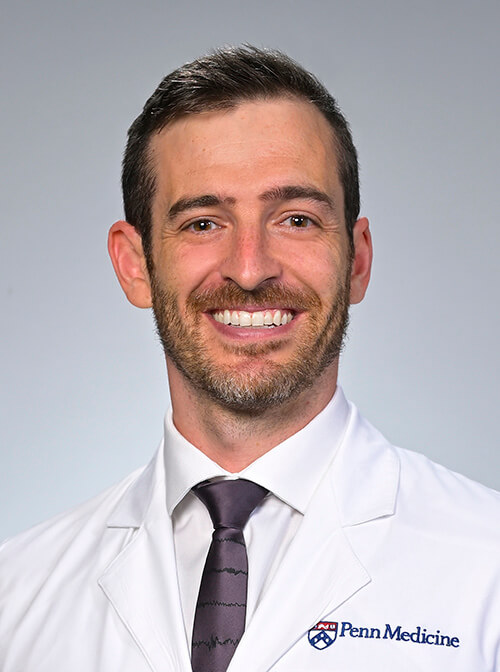
Dr. Fischer is a neurologist and neurocritical care specialist at the University of Pennsylvania, where he directs the RECOVER Program, a multidisciplinary initiative built around predicting who will regain consciousness after severe brain injury and supporting patients and families through that uncertainty. Drawn to his work, I reached out and was fortunate to have the opportunity to speak with him. The conversation that followed was one of the most clarifying I have had so far in trying to understand where the field currently stands, and how many questions remain open.
Dr. Fischer's Journey to Neurocritical Care
Dr. Fischer's path into neurocritical care began not in a hospital but in a philosophy classroom. As an undergraduate, he studied consciousness from every direction he could find, through neuroscience, psychology, and philosophy, before deciding the most meaningful way to pursue those questions was somewhere the answers could help people. As a result, Dr. Fischer followed the medical path - neurology came to him naturally, and within neurology he found disorders of consciousness - a field defined by questions that are amongst the most profound and painful in science and medicine.
The significance of this field really crystallized for him during residency. Dr. Fischer recounted a special case that changed his understanding of recovery in disorders of consciousness. A patient came into the ICU with a major brain bleed, unconscious, completely unresponsive. The attending told the family, very directly, that recovery wasn't going to happen, which after several intense discussions, led to the painful preparation of withdrawing the patient's life support. Then, in a random twist of fate, the attending rotated off service. A new physician came on, looked at the same patient data, the same clinical picture, and saw it differently. He predicted the patient would have a successful recovery, and convinced the family to keep on going. Months later, Dr. Fischer ran into that physician in the hallway. He pulled out his phone and showed him a video of the same patient, walking into the clinic, smiling and having a full conversation.
"It really struck me just how common these errors are in medicine, and how disastrous their consequences are."
— Dr. David FischerWhat separated the two physicians wasn't better technology. The second doctor had simply spent years following patients through the full arc of their recoveries, witnessing outcomes that most ICU physicians never see. Without that longitudinal feedback, the field had no mechanism to learn from its own mistakes. That realization became the foundation for everything Dr. Fischer has built since.
The State of the Field: What We Still Don't Know
Before getting into what Dr. Fischer is building, I wanted to understand what the field actually looks like right now. Honestly, the picture is more unsettling than I expected.
Humanity has been grappling with disorders of consciousness and comas for centuries, and yet fundamental questions remain unanswered. We don't fully understand the pathophysiology of why the brain becomes comatose after injury. We don't have reliable tools for determining how conscious a patient in a disordered state actually is. And the tests used to guide prognosis, to help families decide whether to continue or withdraw life support, are in many cases decades old.
"Families who are suddenly thrust into the world of coma are always a little bit surprised by how little our field actually knows about this problem," Dr. Fischer told me. I found myself surprised by this as well. Despite major advances in neuroscience, from mapping neural circuits to sequencing the genome and developing gene therapies, we still cannot reliably tell a family whether their loved one will wake up.
Part of the problem is structural. The physicians most often tasked with neuroprognostication are ICU doctors who rarely follow patients beyond discharge. They don't see the recoveries they are trying to predict. Without that feedback loop, it becomes nearly impossible to recalibrate or recognize systematic errors. The result is a field where prognostic confidence often exceeds prognostic accuracy, sometimes with devastating consequences.
Compounding this is a communication breakdown. The radiologist reading brain scans, the electrophysiologist interpreting EEG data, the rehabilitation physician, and the palliative care specialist each hold a piece of the picture. None of them are consistently talking to each other. Decisions get made in silos, on incomplete information, at the highest-stakes moments of a family's life.
Covert Consciousness: The Patients Being Missed
One of the most striking things Dr. Fischer described was a phenomenon I had read about but never fully appreciated the clinical weight of: covert consciousness, also called cognitive motor dissociation.
About twenty years ago, researchers first demonstrated that some patients who appeared completely unconscious actually showed purposeful brain activity when asked to follow commands. Patients were told to imagine playing tennis or walking through their home. Their brains responded, not with movement, but with organized, willful neural activity that tracked the commands. From the outside, there was no visible response; yet internally, there appeared to be organized, goal-directed brain activity.
Studies since have shown that up to 25% of behaviorally unresponsive patients demonstrate this kind of covert consciousness.2 This is not a trivial proportion. These are patients who may be aware of everything happening around them, including conversations about withdrawing their life support, while being entirely unable to signal it.
The neurological explanation involves a disconnection between the thalamo-cortical networks that sustain conscious awareness and the motor pathways that would normally translate that awareness into visible response. The circuits for consciousness remain partially intact. The bridge to movement has been severed.
But what I found most important was the caveat running in the other direction. A negative result does not confirm unconsciousness. Deafness, injury to language-processing regions, inattention, sedating medications, movement in the scanner, all of these can produce a false negative in a patient who is in fact aware. As Dr. Fischer put it: "The absence of evidence is not the evidence of absence." In a field where tests guide irreversible decisions, that distinction carries enormous weight.
Functional MRI: Twenty Years Late to the Bedside
The tool at the center of much of this work is functional MRI, neuroimaging that captures not just brain structure but active function, revealing which networks are firing and whether purposeful activity is present. It is one of the most powerful tools available for detecting consciousness in patients who cannot behaviorally demonstrate it.
And yet, when Dr. Fischer and his team began implementing fMRI at Penn roughly three years ago, it was still being used almost exclusively in research settings. Not because the science wasn't there. The foundational studies demonstrating fMRI's utility in detecting covert consciousness date back two decades. The barrier was translation, the slow pipeline between research discovery and clinical application that plagues medicine broadly, but hits especially hard when the patients who could benefit most are the least able to advocate for themselves.
"There are a lot of techniques that have been sequestered away in the research world. We want to break down those barriers and bring those techniques to the patient's bedside."
— Dr. David FischerThe RECOVER Program: A New Model
The RECOVER Program was built to address exactly the failures described above: the feedback gap, the communication silos, and the translational delay.
The program integrates multidisciplinary collaboration across neurology, radiology, electrophysiology, rehabilitation medicine, and palliative care. It provides longitudinal follow-up so clinicians can see whether their predictions were right and calibrate accordingly. And it deploys tools like fMRI as clinical instruments rather than research protocols.
Early data shows improvements in guideline adherence and preliminary evidence of better patient outcomes. Over 100 institutions across the United States and internationally have now joined a consortium to develop similar programs, some through hub-and-spoke models designed for hospitals that can't sustain a full consciousness specialist on-site.3 When I asked Dr. Fischer whether he believed this could become the national standard, he was direct: "I do believe this will be the model for the future, not simply as an aspiration, but as an expectation."
After the ICU: A Persistent Gap in Post-Acute Recovery
The part of our conversation I keep returning to is what happens after the hospital.
In the United States, enormous resources go into keeping patients alive through acute injury. After discharge, that infrastructure largely disappears. Insurance covers weeks of inpatient rehabilitation before patients are sent home to figure out the rest on their own. In parts of Europe, dedicated long-term rehabilitation facilities carry patients through extended recovery. Here, that system barely exists.
What this produces is a cycle Dr. Fischer described. Patients face cognitive and physical deficits accompanied by shame. Shame leads to social withdrawal. Withdrawal reduces stimulation. Less stimulation slows rehabilitation. Slower rehabilitation deepens the deficits. And the withdrawal deepens further. A loop that medicine currently does almost nothing to interrupt.
Hearing him describe it validated something I had seen firsthand in patients: that recovery is not only a biological process. It is a social one. And the systems we have are not designed to support it. That is the gap Empower Through Recovery was built to address, and it is, in many ways, the reason this dialogue series exists.
What Comes Next
This conversation left me with a sharper sense of just how wide the gap remains between what science can explain and what patients actually receive in practice.
Dr. Fischer is working to close that gap from the clinical and research side. At the same time, the work of reintegration, helping survivors rebuild their lives after injury, requires a different kind of infrastructure. That is the space Empower Through Recovery is working to contribute to and help shape.
What remains with me most after this conversation is not a single answer, but the accumulation of uncertainties that feel increasingly consequential. Across prognostication, consciousness detection, and post-ICU recovery, the same pattern appears: decisions are being made in the presence of incomplete visibility, and the systems designed to correct those blind spots are still underdeveloped.
How do we build feedback loops strong enough to correct prognostic error in real time? How do we ensure that consciousness, when uncertain, remains protected rather than assumed away? And how do we design recovery systems that persist long enough to reflect the true timeline of brain repair?
These are not questions this work resolves. They are the questions that will guide what comes next.
- Turgeon AF, Lauzier F, Simard JF, et al. Mortality associated with withdrawal of life-sustaining therapy for patients with severe traumatic brain injury. CMAJ. 2011;183(14):1581–1588. doi:10.1503/cmaj.101786 ↗
- Edlow BL, Claassen J, Schiff ND, Greer DM. Recovery from disorders of consciousness: mechanisms, prognosis and emerging therapies. Nat Rev Neurol. 2021;17(3):135–156. doi:10.1038/s41582-020-00428-x ↗
- Fischer DB, Truog RD. What is a reflex? A guide for understanding disorders of consciousness. Neurology. 2015;85(6):543–548. doi:10.1212/WNL.0000000000001818 ↗