SN
By Shivek Narang · Founder, Empower Through Recovery · TBI Researcher, University of Pennsylvania
I wanted this conversation with Dr. Dhaval Shukla because I had heard many of the same concerns about brain injury recovery in the United States, and I wanted to understand what those gaps look like in a very different healthcare system. Dr. Shukla has spent decades at NIMHANS in Bengaluru, working across traumatic brain injury care from emergency surgery to rehabilitation and advocacy. What stood out to me was that India can do a lot very well in the acute phase. The harder question is what happens after the patient survives.
How He Came to Traumatic Brain Injury
Dr. Shukla told me his interest in traumatic brain injury started in a way I did not expect. When he began training at NIMHANS, he was not from southern India and had difficulty communicating with patients in the local language.
So he chose a research project that did not depend on patient interviews: an autopsy study of traumatic brain injury. At the time, a lot of research was moving toward MRI and newer technologies. He went in the opposite direction and studied pathology directly.
He stayed with TBI because, as he put it, the field felt like an orphan area of neurosurgery. There were huge numbers of patients and huge amounts of data, but not enough people paying attention to what happened across the whole course of recovery.
What Acute TBI Care Looks Like at NIMHANS
NIMHANS still sees a large number of traumatic brain injury patients, many of them young people injured in road traffic accidents. Dr. Shukla described a system where severe cases are sent directly to centers with CT imaging and neurosurgical care instead of losing time at smaller facilities that cannot provide the treatment they need.
One thing I found interesting is that much of this acute care is available at very low cost or free in government hospitals. Dr. Shukla was clear that, for the emergency phase, India is not necessarily behind other parts of the world.
The major gap starts later.
The Gap After Surgery
I told Dr. Shukla about a survivor I had spoken with in the United States who said she was discharged from rehabilitation once she could tie her own shoes.
His response surprised me. He said that tying your shoes would actually be a much better milestone than what many patients in India reach before leaving acute care.
At NIMHANS, he described patients being discharged to nursing homes even while still unconscious because there are not enough rehabilitation beds. The hospital may save someone's life, but there is no guarantee that the same person will move into structured rehabilitation afterward.
Why Rehabilitation Changes Outcomes
Dr. Shukla told me about an observation one of his professors made years ago: rich patients do better after traumatic brain injury.
The reason was not that they received better emergency surgery. The acute treatment could be very similar. The difference came after discharge, because families with money could pay for rehabilitation and continued care.
He also described data showing that some patients who survived hospitalization died in the weeks after discharge. That was one of the clearest examples in this conversation of why post-acute care is not optional.
Who Comes Back for Follow-Up
Another part of our conversation was about who actually returns to clinic.
Dr. Shukla said patients who are doing very well may not come back because they feel grateful simply to be walking and talking. Patients who are doing very poorly may not come back because getting them to the hospital is too difficult.
The people in the middle are often the ones who return: patients with disabilities or behavioral changes that are affecting daily life.
He also pointed out that the same cognitive problem can matter very differently depending on someone's work and family situation. A small change in executive function may be devastating for one person and barely noticed by another.
The Referral Pathway He Wants to Build
Near the end of our conversation, I asked Dr. Shukla what one change he would make if he could.
His answer was a referral pathway.
There is already a pathway from the accident to the trauma center. What he wants is the rest of the pathway: trauma center to rehabilitation, rehabilitation back to the community, and a way for patients not to disappear once the surgery is over.
That answer connected directly with what I have heard in other conversations in this series. The healthcare systems may look very different, but survivors in many places are asking the same question: where do I go next?
Research and Care
Dr. Shukla also said something I think is important for students and researchers.
If a patient agrees to participate in research, he believes the researcher has a responsibility to continue caring about what happens to that person after the study endpoint.
He described research and care as things that should happen in parallel. I liked that because the best longitudinal data also comes from continuing to know the people behind the data.
Closing Reflection
What I took from this conversation is that saving a life and supporting a recovery are not the same thing.
NIMHANS can provide emergency neurosurgical care to a huge number of patients. The harder part is making sure there is somewhere for those patients to go afterward.
Dr. Shukla's answer was not complicated: build the pathway all the way back to the community.
What I envision is a holistic referral pathway: triaging, sending to the trauma center, then sending back to rehabilitation, and then to the community.
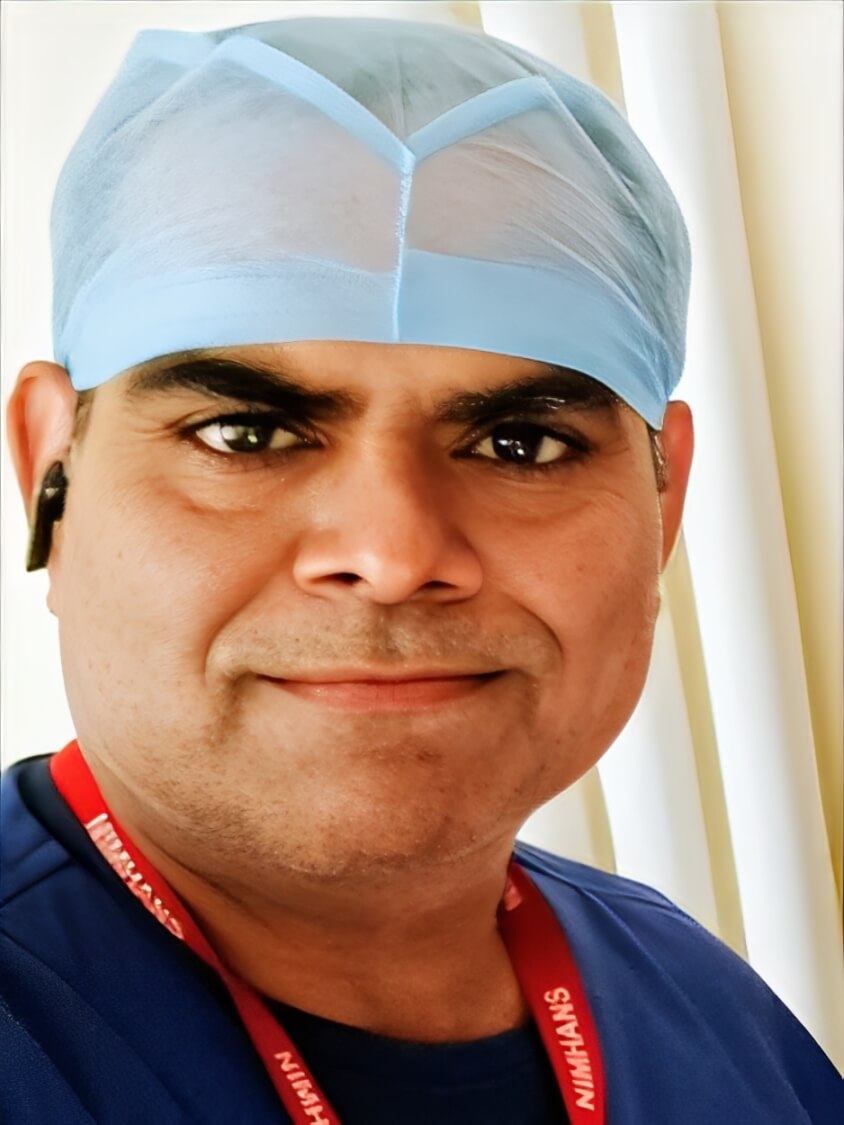
Dr. Dhaval Shukla
References and further reading
- Jain C, Devi BI, Bhat DI, Shukla DP. Current Status of Traumatic Brain Injury in India. Indian J Neurotrauma. 2024. Thieme ↗ ResearchGate ↗
- Adusumilli A, Sukumar GM, Pandey G, Shukla D. Measuring preparedness of hospitals to manage traumatic brain injuries: Criterion development and assessment in an Indian district. J Neurosci Rural Pract. 2025;16:160-6. Full text ↗
- Devi BI, Shukla DP, Bhat DI, et al. Neurotrauma care delivery in a limited resource setting: lessons learned from referral and patient flow in a tertiary care center. World Neurosurg. 2019. PubMed ↗
- Neurotrauma Society of India. National Guidelines for the Management of Traumatic Brain Injury. 2022. Consensus guidelines covering prehospital care, hospital care, and neurorehabilitation. Referenced in ↗
- Maas AIR, Menon DK, Adelson PD, et al. Traumatic brain injury: integrated approaches to improve prevention, clinical care, and research. Lancet Neurol. 2017;16(12):987-1048. doi ↗
- RESCUE CD Trial. Decompressive craniectomy versus decompressive craniotomy in traumatic brain injury. Cambridge Clinical Trials Unit (CCTU). Administrative PI: Dr. Daval Shukla, NIMHANS. cambridge-ctu.org ↗
- Corrigan JD, Hammond FM. Traumatic brain injury as a chronic health condition. Arch Phys Med Rehabil. 2013;94(6):1199-1201. PubMed: 23402722 ↗